
By Olga Naomi Tumugonze
22 years ago, my father gave me this piece of wisdom after seriously whooping me for hiding a report card, which he’d suddenly discovered among his documents:
“Be honest, and always uphold integrity, no matter where you are or who you are with.” The report card had earlier been reported “missing” by yours truly, but the evidence was right there in his custody. Case closed.

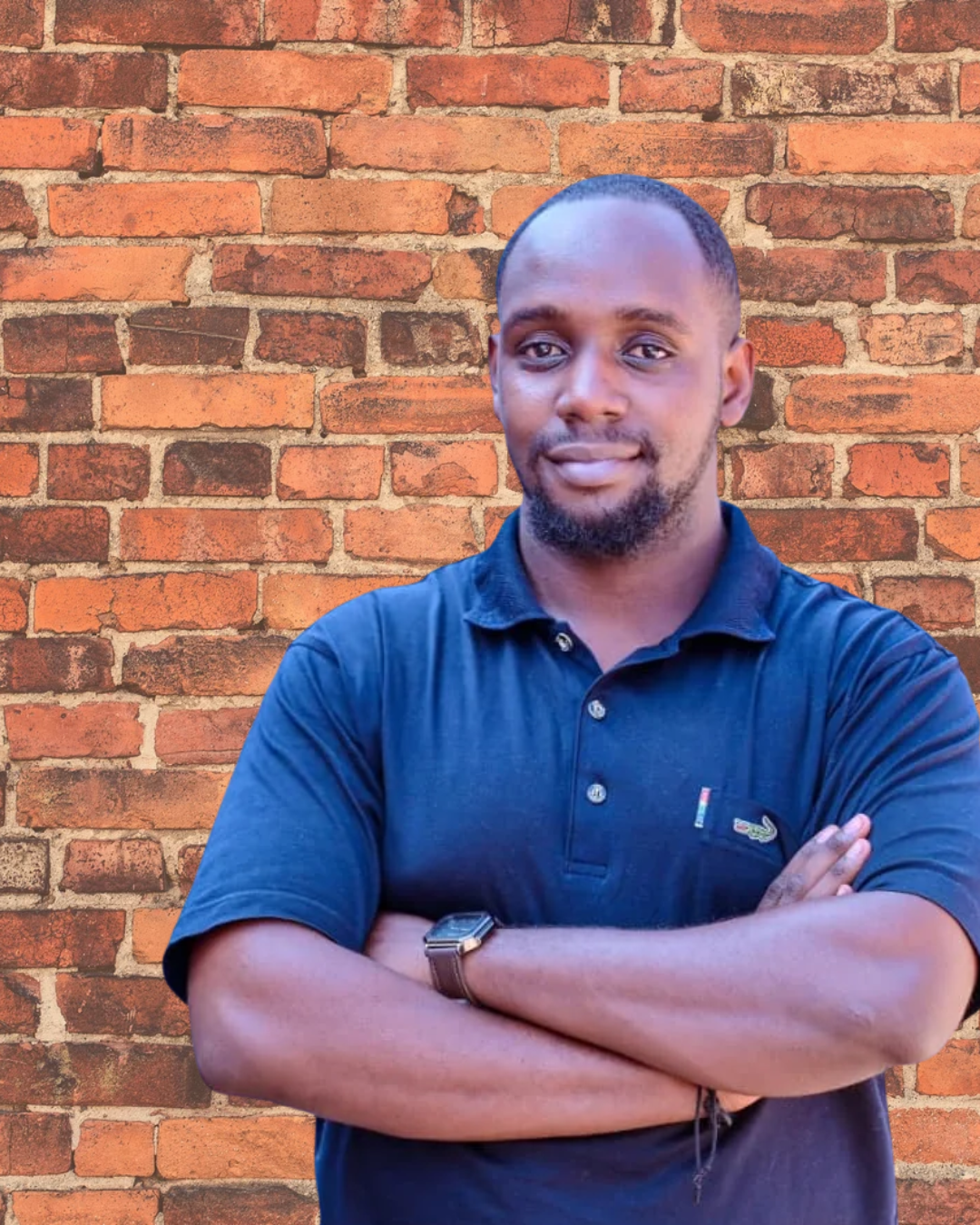
Photo: Olga Naomi
Context: I had just moved from a school where I often ranked among the top three to another where I was suddenly leading from behind, second from the bottom.
The fall from grace was steep, and I was not about to give my parents a front-row seat. So, I hid the report card, hoping ignorance on their part could somehow improve my academic performance. Unfortunately, my father was not in the business of letting evidence gather dust.
Beyond the punishment, I left with a lesson that I’ve since carried into adulthood. As a child, I understood integrity in terms of a hidden report card. As an adult, I‘m learning that the principle is simple enough to teach a child but considerably harder to live out.
No one prepares you for the ways in which your convictions will be tested in the corporate world. You arrive with your values and your sense of right and wrong, eager to deliver and grow. Then you hear, “How can we cut this corner and that one?” with suggestions hidden in corporate lingo like “operational efficiency” and “strategic alignment.” On some days, the pressure is subtle, and on other days, it is so direct you cannot pretend not to understand it.
It is easy to believe in integrity when everything is going well, and it is incredibly harder when honesty could make you unpopular, delay a deliverable, or cost you an opportunity. After all, bills are still due at the end of the month, whether or not you stood your ground in that meeting. I believe that our values are tested not when doing the right thing is easy, but when doing the wrong one seems to even make more sense.
When I joined the Faith & Work Bukoto Cohort in August 2026, I realized the question went deeper than whether I was an honest person at work. It was about how I understood my work, whom I ultimately served, and what faithfulness to God looks like in the daily rhythm of each working day.
Like many of us, I had been treating work as a place I show up to, do my best, and go home. You know the routine: posting those funny “dreading Monday” memes on your statuses on Sunday night, then dragging yourself out of bed early, and counting down the hours until you can finally leave, again. Before long, work becomes a cycle of chasing targets, waiting for payday, and eyeing the next promotion.
But Scripture offers a richer picture. In Genesis 1, as our first Cohort lesson stated, God creates, orders, and cultivates the world, and He gives humanity the task of doing the same.
This happens before the fall, which means work is not a curse. It is part of God’s good design. We were made to build, serve, and solve problems as His stewards, using the gifts, relationships, and opportunities He has entrusted to us.
That changed everything for me. My job was no longer just a place to earn a living. It was a place to serve others, contribute to the common good, and steward what God had placed in my hands. Instead of “How do I get through today?” I often ask myself, “How can I be faithful to God in the work He has given me?” at the start of each day.
This also redefined what it meant to do my job well. Colossians 3:23 urges us to work heartily, as for the Lord. It also reaffirmed my belief that working for the Lord means the way I achieve a result matters just as much as the result itself.
You cannot claim to work faithfully while relying on dishonesty or shortcuts. If you are working ‘as unto the Lord’, cutting a corner because you can get away with it is no longer just a question of ethics. It is a question of faithfulness. Whose standards are you upholding, and what does your conduct say about the God you profess to serve?
Work has also exposed the heart. I may desire to be known for integrity and still flinch when honesty threatens my comfort. I may value diligence and still be tempted by shortcuts. The goal is not simply to become a more ethical employee through sheer willpower, but to be conformed to the likeness of Christ: growing in truthfulness because He is true, in humility because He humbled Himself, and in respect for others because they, too, bear the image of God.
And when you fall short, I learned, grace calls you to repentance, to make things right, and to keep growing. In this way, the workplace becomes not only a place where you practice your faith but also one where God refines your character.
None of this means pretending work is easy. It can be exhausting and, in a fallen world, deeply unjust, and valuing work does not mean tolerating exploitation.
But work itself remains a gift and a calling, even when conditions make it hard. Not every task will feel significant, yet a spreadsheet completed accurately, a hard conversation handled honestly, a promise kept, or a colleague treated fairly can each be an act of faithfulness. Perhaps we should stop waiting for work to feel extraordinary before we recognize its worth. Its significance lies not only in the task but also in the God we serve and the way we carry it out.
Years after the report card incident, my father’s words follow me into rooms he will never enter and decisions he may never know I had to make. What began as a father’s lesson has become a principle I must choose again and again. But I now see it as part of a bigger story. Especially from my experience at Faith and Work Kampala. I am not simply trying to be a good employee or a moral person. I am a Christian seeking to live faithfully before God in every area of life, including my work.
So, when the temptation to cut corners knocks at my door, I want to remember my dad’s voice and all the invaluable lessons I picked from the Cohort and the truth beneath them all. That I belong to Christ, that the work I do has been entrusted to me by God, and that faithfulness matters even when no one else sees it.
To be honest, endeavor to uphold integrity and work faithfully. Not because someone might be watching, but because every part of my life belongs to Him.
The writer is a legal and compliance officer in the insurance sector and is part of the Bukoto Faith and Work Cohort


Good work 👏